
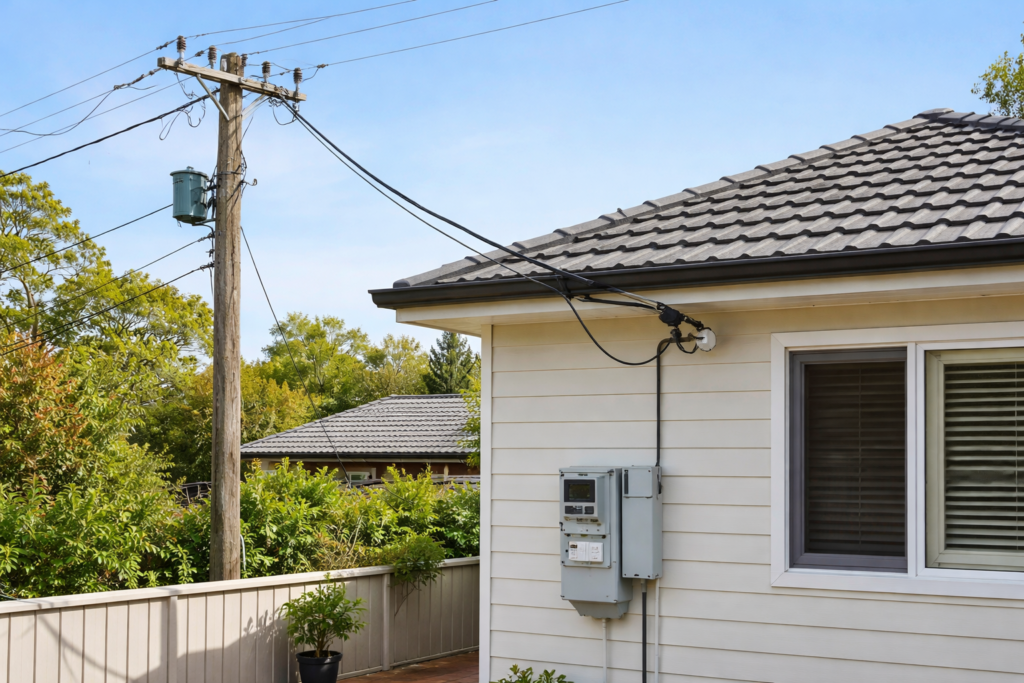
When electrical supply problems occur, one of the first questions people ask is who is responsible for fixing them. In New South Wales, responsibility for electrical infrastructure is shared between the electricity network and private property, depending on where the issue is located.
Because electricity flows from the street network, through supply connections and metering equipment, and into a property’s switchboard, identifying where the fault sits within that system is the first step in determining who should respond.
Before understanding responsibility, it helps to understand how electricity reaches a building.
Power typically flows through several stages:
Each section is managed by a different party. Because of this, electrical supply issues can sometimes involve more than one organisation.
Electrical distributors manage the public electricity network that delivers power across suburbs, towns and cities.
In NSW, this infrastructure generally includes:
If an outage affects multiple properties in the same area, the issue is usually located within the electricity network and should be reported to the electricity distributor. Different distributors manage different parts of New South Wales.
Services Sydney, Newcastle, and the Hunter region.
Services Greater Western Sydney, the Blue Mountains, Southern Highlands, Illawarra, and the South Coast.
Covers regional and rural NSW, including the North Coast and many inland areas.
Once electricity reaches the property, responsibility may shift to the property owner.
Electrical infrastructure located on the property side may include:
If a supply issue is isolated to one property, the cause is often located within these privately managed assets.
In some cases, faults involving service mains or supply connections may require specialised electrical work to safely investigate and repair.
Some electrical infrastructure sits at the boundary between the electricity network and a property. These connection points can sometimes make responsibility less obvious.
Overhead cables linking the street network to a property can be affected by weather, tree branches, vehicle impact, or ageing infrastructure. Damage to these connections may interrupt supply or cause instable power.
Underground cabling supplying electricity to a property can also develop faults over time, particularly where ground movement, moisture, or infrastructure deterioration is involved.
Service mains are the cables that connect the electricity network to a property’s electrical system. They carry power from the street network into the property’s meter and switchboard.
In NSW, service mains are typically installed in one of the following ways:
Cables run from a network pole into a Point of Attachment (POA) on the property.
Cables run underground from street infrastructure such as a pillar or substation directly to the property.
A hybrid arrangement where the service cable runs underground from a network pole and then travels up the structure of the property. This method is often used to remove overhead street wires while still supplying power to the building.
Because service mains form the physical connection between the electricity network and the property, faults in this part of the system can sometimes make responsibility less obvious.
In these cases, professional assessment may be required to determine the exact location of the issue and the appropriate next step.
Some electrical infrastructure between the electricity network and a property’s internal wiring requires specialised electrical work.
Work involving supply connections often requires a Level 2 electrician, who is authorised to carry out electrical work on the connection between the electricity network and a property.
This type of work may include:
If a supply issue occurs in this part of the system, the property owner may need to arrange for a Level 2 electrician to investigate and carry out the required work.
If you’re unsure when a Level 2 electrician is required, our guide Level 2 Electricians and Your Power Supply: A Simple Guide explains the process in more detail.
Some situations indicate the problem is likely within the electricity network.
This may include:
Fallen power lines are particularly dangerous. If you encounter damaged or fallen lines, stay at least 8 meters away and contact the electricity distributor immediately.
If neighbouring properties still have power and the issue appears isolated to one property, the cause may lie within the property’s electrical system.
Signs this may be the case include:
A qualified electrician can inspect the system and determine whether the issue is related to internal wiring, switchboards, or supply-side infrastructure.
If you’re unsure whether the issue is urgent, our guide When Is an Electrical Issue an Emergency? How to Tell and When To Act explains the warning signs to look out for.
Electrical supply systems involve several interconnected components, and identifying the source of a fault is not always straightforward.
Understanding how responsibility is divided between the electricity network and private property helps ensure the correct party responds and can prevent unnecessary delays in restoring power.
Powellect provides professional electrical services, including Level 2 electrical work, across Newcastle, Port Stephens and the Hunter. If you’re unsure where a power supply issue sits or who should respond, our team can help assess the situation and guide you on the next step so the right support can be arranged.