
Storms can cause obvious damage, such as fallen trees or downed power lines. But in many cases, electrical issues aren’t immediately visible. Instead, problems may develop gradually, appearing hours or even days after the storm has passed.
Understanding how storms affect electrical systems, including power supply connections, can help property owners recognise warning signs early and respond appropriately.
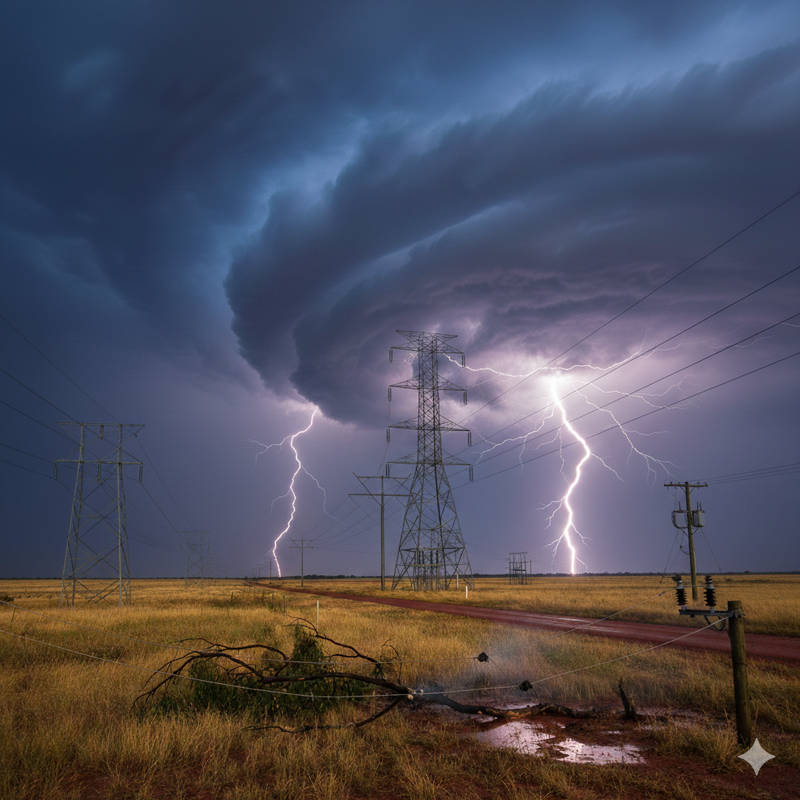
Storm damage doesn’t always look dramatic, but it can affect electrical systems in several important ways.
Strong winds and falling branches can place strain on overhead service lines connecting properties to the network. Even if lines don’t fully detach, tension or movement can loosen connections or weaken attachment points.
In some cases, this type of damage may not interrupt power straight away but can later result in instability, partial supply issues, or connection faults. Where storm damage affects supply connections between the network and a property, assessment by a Level 2 electrician may be required.
Heavy rain can allow water to enter:
Moisture can corrode connections, reduce insulation resistance, and cause faults that only appear once systems resume to normal load.
Lightning doesn’t need to strike a property directly to cause issues. Nearby strikes can create voltage surges that travel through the network and into connected systems.
These surges may:
Sometimes the damage isn’t obvious until equipment begins malfunctioning days later.
Storms can cause faults within the wider electricity network. While many network-level issues are resolved quickly, some events can expose weaknesses in supply connections to individual properties.
If your property experiences:
It may relate to the connection between the network and your building rather than a general outage.
Storm-related outages affecting multiple properties are typically managed by the electricity distributor. However, when the issue is isolated to a single property – particularly where it involves service mains, metering equipment, or the network connection point – responsibility may sit with the property owner.
This is where a Level 2 electrician becomes essential, as they are authorised to carry out work on supply-side infrastructure and network connection points.
Properties with solar systems may experience additional complications following storms.
High winds can disturb panel mounting systems, while surges may affect inverters or metering equipment. Even if panels appear intact, underlying electrical components may have been impacted.
If performance changes or system errors appear after a storm, inspection may be warranted.
Not all electrical damage is immediate.
Storm-related stress can weaken components without causing an instant outage. Once systems return to normal operation and begin carrying full load again, compromised connections or equipment may begin to fail.
Common delayed issues include:
These delayed symptoms are common after severe weather.
It’s worth seeking professional advice if you notice:
Government electrical safety guidance recommends addressing storm-related electrical issues promptly. Early assessment can help prevent minor storm damage from developing into larger supply faults.
Electrical systems can be affected in ways that aren’t immediately obvious. Even when power appears restored, underlying damage may still exist.
Powellect provides 24/7 emergency electrical services across Newcastle, Port Stephens and the Hunter. If storm-related electrical issues arise or you’re unsure how to respond, our team can help guide you on the next steps and arrange the right support when it’s needed.2q