
Winter changes how most households and businesses use electricity. Heaters run longer, lights are switched on earlier, dryers replace clotheslines, and hot water systems work harder to keep up with colder incoming water temperatures.
Most properties across Newcastle, Lake Macquarie, Port Stephens, and the Hunter Region get through winter without major electrical issues. But colder weather can expose problems that may not have been noticeable during the rest of the year, particularly in older homes or properties where electrical demand has steadily increased over time.
It’s worth knowing what to watch for so you can pick up on early warning signs rather than waiting for something to go wrong. If you’ve already noticed your power bill creeping up, increased winter hearing demand is often part of the picture.
During winter, electrical demand increases across the property as heating, lighting, hot water systems, and other appliances all start working harder at the same time.
That increased demand places more pressure on circuits, switchboards, and supply connections, especially during colder mornings and evenings when several high-demand appliances are operating together.
At a property level, this usually starts showing up at the switchboard. Circuits that handled normal usage comfortably during warmer months can begin struggling once heaters, hot water systems, and cooking appliances are all operating together for extended periods.
The Australian Market Operator (AEMO) has also reported that cold weather and increased heating demand place significant pressure on the wider electricity network during winter peak periods.
Winter electrical issues are often less about a single faulty appliance and more about increased demand across the electrical system.
Portable heaters, electrical blankets, dryers, kettles, and cooking appliances can all place heavy demand on household circuits during winter.
In many cases, the problem is simply too much electrical load being placed on the circuit at once. This commonly shows up as circuit breakers tripping, lights flickering or dimming, warm power points, or power fluctuations when appliances switch on.
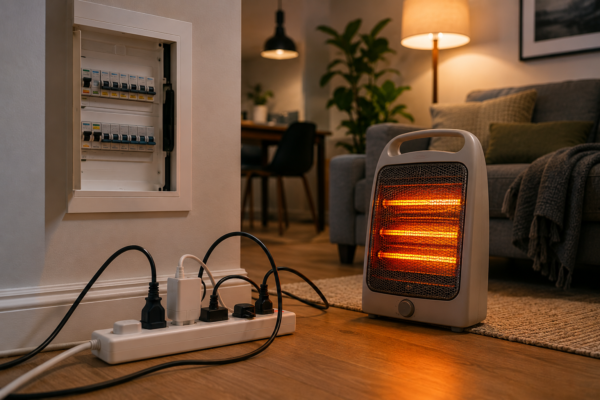
Portable heaters place significant demand on household circuits, particularly in older homes or properties already carrying higher electrical load.
Running heaters from overloaded power boards, undersized extension leads, or ageing circuits can place additional strain on the system during long periods of use. Common warning signs include warm plugs, discoloured power points, repeated tripping, or intermittent power loss.
As homes add air conditioning, modern appliances, workshops, home offices, or additional living spaces, overall electrical demand continues to increase. During winter, older switchboards can start showing signs they are struggling to keep up with peak usage, particularly during the evening.
Common signs include:
Where faults involve overhead service mains, underground supply cables, metering equipment, or network connection points, a Level 2 ASP electrician is required to investigate and carry out repairs.
Electric hot water systems often work harder during colder weather as incoming water temperatures drop.
Older systems or failing heating elements can become noticeably less efficient during winter and may contribute to sudden increases in electricity usage. Hot water running out faster than normal, intermittent tripping, or difficulty keeping up during peak periods can all indicate the system is struggling.
Some electrical issues only become noticeable during periods of high demand. It’s important to pay attention if you notice:
If you’re unsure whether an issue requires urgent attention or can wait, our guide on when an electrical issue is an emergency walks through the difference and helps you work out the right next step.
A few practical steps can help reduce unnecessary pressure on your electrical system during colder months:
These steps will not fix an underlying fault, but they can help reduce unnecessary strain on the system during periods of high usage.
Energy NSW also recommends keeping heating temperatures between 18-21 degrees during winter to help reduce unnecessary energy consumption and electrical demand.
If your electrical system has started showing signs of strain during winter, it may be worth arranging a professional inspection before the issue develops further. Older switchboards, ageing service mains, and electrical systems carrying higher loads than they were originally designed for can become more noticeable during winter peak usage.
For anything that might involve the supply connection or metering equipment rather than the internal wiring, our guide Who Is Responsible for Electrical Supply Issues in NSW? explains how responsibility is divided and when a Level 2 ASP electrician may be required.
Winter places different demands on electrical systems than other times of year. Identifying problems early can help reduce unnecessary strain on the system and minimise the risk of larger electrical faults during periods of high usage.
Powellect provides general electrical, Level 2 ASP, and emergency electrical services across Newcastle, Lake Macquarie, Port Stephens, Maitland, and the Hunter Region.
Whether you need a switchboard inspection, advice about increasing winter power demand, or urgent electrical repairs, the Powellect team can help assess the issue and recommend the right next step.