
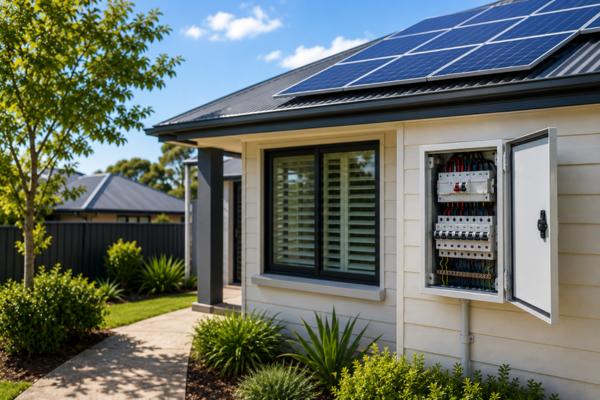
When you’re planning solar, most of the attention goes to the panels, the inverter, and how much electricity the system could generate. What’s easy to overlook is the existing electrical system that the solar installation needs to connect to.
For some homes, the existing electrical setup is already suitable. For others, electrical work is required before the solar installation can proceed. This can include changes to the switchboard, circuit protection, metering, or in some cases the property’s incoming electrical supply.
Powellect does not install solar systems. We carry out the electrical upgrades that may be needed to prepare a property for solar, including switchboard upgrades and Level 2 ASP work where the scope requires it. Checking these things before installation begins can save time and reduce the chance of unexpected work holding up the project.
A solar system doesn’t operate separately from the rest of your home’s electrical installation. Once connected, it becomes part of that system and works alongside the electricity supply already feeding the property.
That means the existing electrical infrastructure needs to be considered as part of the solar project. The switchboard is an important part of this, but it’s not always the only consideration. Depending on the property and the proposed solar system, the existing circuit protection, electrical capacity, metering, and incoming supply may all need to be looked at.
Every property is different, which is why the electrical preparation required before solar can vary considerably from one home to another.
Not necessarily. Installing solar doesn’t automatically mean a new switchboard is required. What matters is whether the existing switchboard is suitable for the proposed installation and has the space and protection required.
Older switchboards, particularly those still containing ceramic fuses, are more likely to need attention before solar can be connected. A switchboard that’s already at capacity can also present a problem if there isn’t room for the additional equipment the solar installation requires.
The NSW Government’s energy guidance on switchboard upgrades notes that you may not realise a switchboard upgrade is needed until you arrange an inspection for another electrical upgrade, such as solar. Having it assessed before your solar installer arrives is the more practical approach.
If you’re unsure about the condition of your switchboard, our post on signs your switchboard needs an upgrade covers the most common indicators in detail.
Solar changes the way electricity can flow between your property and the grid. Without solar, your meter records electricity coming into the property. With a grid-connected solar system, electricity may also be exported back to the network when the system is producing more than the home is using.
This means your existing meter needs to be capable of measuring both import and export. According to Ausgrid, all new and replacement meters installed since December 2017 must be smart meters. If your property still has an older meter, it will need to be upgraded as part of the solar connection process.
Your electricity retailer is responsible for arranging the meter upgrade through an accredited metering provider. Your solar installer should walk you through this process, but it’s worth understanding it early as meter changeovers can add time between installation and the system being switched on.
Available electrical capacity is worth considering whenever solar forms part of a broader change to how electricity is used around a home. This is particularly relevant if you’re planning solar alongside battery storage, an EV charger, air conditioning, or other high-demand equipment.
In these situations, it makes more sense to look at the electrical system as a whole rather than treating each addition separately. The existing switchboard and supply may need to be assessed to determine whether any upgrades are needed before or alongside the solar installation.
If your household has already been adding appliances and equipment over the years, it’s also worth checking whether your circuits are already running close to capacity. Our post on why your power bill keeps going up explains how circuits under sustained load can affect both efficiency and safety.
Circuit breakers and safety switches protect the electrical installation. When changes are being made to the system, the existing protection needs to be assessed as part of the work.
Older installations may have a different arrangement to a modern switchboard, particularly if the property has been altered or additional circuits have been added over the years. That doesn’t mean everything needs replacing before solar can be installed, but the existing setup does need to be assessed against what the solar installation requires.
It’s also worth noting that any new or altered circuits installed as part of the solar preparation work must meet current wiring standards, which include RCD protection on all final subcircuits under AS/NZS 3000:2018. A licensed electrician will identify what’s required as part of the assessment.
Not every home needs Level 2 electrical work before installing solar. However, becomes relevant when preparing the property involves changes to the infrastructure connecting the property to the electricity distribution network.
In NSW, Level 2 Accredited Service Providers (ASPs) are authorised to carry out specific connection services, including work on service lines, energising new or altered connections, and certain network devices associated with the main switchboard. You can read more about the scheme on the NSW Government ASP Scheme page.
Powellect holds Level 2 ASP accreditation and provides Level 2 electrical services across Newcastle and the Hunter Region. Where Level 2 work is needed alongside other electrical upgrades, the team can manage both under a single engagement. Our guide on Level 2 electricians and your power supply explains the difference between general electrical work and Level 2 work in plain terms.
No. Some homes will already have an electrical system that’s suitable for the proposed solar installation. Others may need relatively minor changes. Properties with older switchboards, ceramic fuses, or additional supply requirements may need more substantial work.
The important thing is not to assume that an older home automatically needs everything replaced, or that a newer home will need nothing. What needs to be done depends on the existing installation and the solar system being proposed. The only reliable way to know is a professional assessment.
Finding out that electrical work is required isn’t the problem. Finding out when the solar installation is already underway can be. Discovering mid-project that the switchboard needs upgrading or the meter isn’t compatible adds time and cost that could have been avoided.
Having the electrical system assessed early is particularly useful if:
If none of these apply, an assessment will confirm that clearly. Either way, you’ll go into the solar installation with a better understanding of what the electrical system needs.
Troy and the Powellect team bring over 40 years’ experience working across homes, businesses, strata properties, and industrial sites throughout Newcastle, Lake Macquarie, Port Stephens, Maitland and the Hunter Region.
Powellect carries out the electrical upgrades required to prepare properties for solar, including switchboard upgrades, circuit protection work, and Level 2 ASP services where required.
If you’re planning solar or your solar installer has told you that electrical work needs to be done first, it’s worth getting the electrical side sorted early so it doesn’t hold up the project.
Contact us to discuss what might be needed for your property, or call any time for 24/7 emergency support. See the full list of areas we service across the Hunter region.