
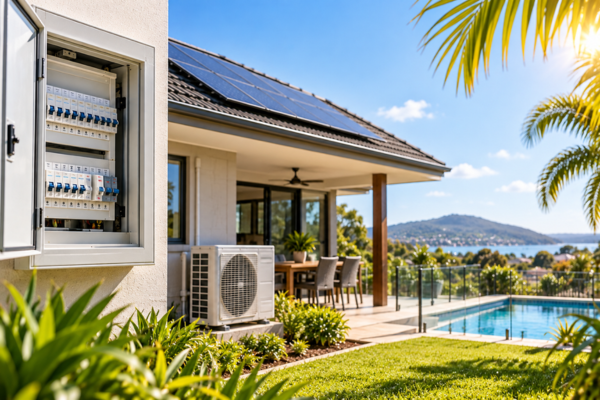
Summer in Newcastle and the Hunter Region can mean long stretches of hot weather, with air conditioning, fans, pool equipment, and other appliances working harder and running for longer.
All of that adds to the electrical demand around your home. In many cases, problems that appear during summer aren’t new faults caused by the heat. They’re existing issues that become more noticeable when circuits are carrying higher loads for longer periods.
Repeatedly tripping circuit breakers, flickering lights, or unusual heat around electrical equipment can all be signs that something isn’t operating as it should. If your power bill has already been creeping up, summer demand is often part of the reason.
Getting on top of these issues before the hottest part of the year can help reduce the risk of electrical faults, unexpected outages, and inconvenient breakdowns when you need your electrical system most.
Air conditioning is one of the biggest contributors to increased electrical demand during hot weather. Depending on the property, there may also be pool pumps, ceiling fans, additional refrigeration, and other appliances running throughout the day.
Individually, these appliances may not cause any problems. It’s the combined and sustained load that can expose weaknesses in an electrical system, particularly in older homes or properties where electrical demand has increased considerably over the years.
Hot weather and widespread air conditioning use also contribute to periods of high demand across the electricity network, particularly during heatwaves when overnight temperatures stay high and systems run around the clock.
At home, the important question is whether your electrical system is equipped to safely handle what you’re asking it to do. If the problem is with the power supply to your property rather than the electrical system inside your home, our guide to summer power supply issues explains what can happen when demand increases during hot weather.
Air conditioning can place a significant load on your electrical system, particularly when larger or multiple units are operating for extended periods.
Depending on the size and type of system and the existing electrical installation, a dedicated circuit with appropriate protection may be required. Problems can arise when an existing circuit isn’t suitable for the load being placed on it, older wiring is supplying newer equipment, or additional air conditioning has been installed without considering the overall electrical demand of the property.
Some warning signs worth paying attention to include:
If you’re planning to install additional air conditioning or replace an existing unit with a larger system, having the electrical requirements looked at beforehand can help identify whether any circuit or switchboard work will also be needed. Our guide to common electrical problems homeowners shouldn’t ignore explains some of the other warning signs to look out for around your home.
Your switchboard distributes electricity throughout the property and contains the protective devices for your electrical circuits. When several high-powered appliances are operating at once, your switchboard plays an important role in keeping those circuits appropriately protected.
An older switchboard isn’t automatically unsafe simply because of its age. However, a switchboard fitted with ceramic fuses can be a sign that the electrical installation hasn’t undergone a major upgrade for many years. During that time, the electrical demand of the home may have changed considerably.
Modern switchboards use circuit breakers and safety switches rather than the ceramic fuse arrangements commonly found in older homes. Safety switches are particularly important because they’re designed to quickly disconnect power when certain electrical faults are detected. The NSW Government notes that safety switches are one of the most effective ways to reduce the risk of electrical incidents in the home.
If your switchboard still has ceramic fuses, frequently trips, has very little room for additional circuits, or hasn’t been assessed despite years of electrical additions, it may be worth having it checked. Our guide to signs your switchboard needs an upgrade covers what to look for in more detail.
Electrical wiring and connections are designed to operate safely within particular conditions, but age, deterioration, and prolonged exposure to heat can all affect an electrical installation over time.
Roof spaces are a good example. They can become extremely hot during summer, and wiring installed through these areas may have been exposed to high temperatures for many years. Older wiring can also become brittle or deteriorate with age, and higher electrical demand during summer can make existing problems more noticeable.
There are visible warning signs you can watch for around the home without needing to inspect concealed wiring yourself. These include damaged power points or switches, discolouration, burning smells, buzzing or crackling sounds, and electrical fittings that become unusually hot during use. If something doesn’t look, smell, or sound right, it’s worth having it checked rather than waiting to see whether it gets worse.
Summer usually means more time outdoors, which often means more use of pools, outdoor lighting, entertaining areas, and exterior power points. Unlike most electrical equipment inside the home, outdoor installations spend their lives exposed to the elements.
Before summer gets into full swing, take a look at the electrical equipment you can safely see around your outdoor areas. Things worth watching for include:
Water and electricity are never a combination to take chances with. If electrical equipment around a pool or outdoor area is damaged or behaving unusually, have a licensed electrician inspect it rather than attempting repairs yourself. Outdoor circuits and pool electrical work carry specific installation requirements under Australian wiring standards.
For many households, yes. Air conditioning can account for a significant portion of electricity use during summer, particularly through extended periods of hot weather when systems are running for much of the day.
There are a few simple ways to reduce how hard your cooling system needs to work. Energy NSW recommends setting your air conditioner to 23 to 26 degrees in summer, where each degree lower adds around 10% to the running cost of the unit. Keeping filters clean, closing blinds during the hottest part of the day, and using ceiling fans alongside air conditioning can all help reduce load and running costs.
A higher electricity bill during summer doesn’t necessarily indicate an electrical problem – if you’ve been running air conditioning more, an increase is to be expected. But if your electricity use has increased without an obvious change in how you’re using the property, it may be worth looking into why. Our guide to why your power bill keeps going up covers some of the less obvious causes.
Electrical problems can happen at any time of year, but increased summer demand can make some existing issues easier to notice. The following are five key things to look out for.
If the same breaker repeatedly trips when air conditioning or other high-powered appliances are running, don’t simply keep resetting it. The cause should be investigated.
If lights noticeably flicker or dim when an air conditioner or another large appliance starts, there may be an issue worth looking into.
Electrical fittings that become unusually warm during normal use shouldn’t be ignored, particularly if there’s also discolouration, a burning smell, or visible damage.
Unusual heat, buzzing, burning smells, or scorch marks around a switchboard should be checked by a licensed electrician.
Some increase is normal during summer. A substantial increase without an obvious explanation may be worth investigating.
The important thing is to look for changes. If something that has always worked normally suddenly starts behaving differently when summer demand increases, there’s usually a reason. If you’re unsure whether something needs urgent attention, our guide to when an electrical issue is an emergency explains the warning signs that require an immediate response.
Heat isn’t the only thing summer can throw at your electrical system. Newcastle and the Hunter Region can also experience severe storms, heavy rain, and strong winds, which can affect both the electrical installation within a property and the infrastructure supplying electricity to it. Our guide to how storms affect your electrical system explains what to look for after severe weather and when a licensed or Level 2 electrician needs to be involved.
You don’t need to replace or upgrade electrical equipment simply because summer is approaching. For many homes, the existing electrical system will handle the additional demand without a problem.
The important thing is not to ignore the signs when something isn’t operating as it normally does. If circuit breakers have started tripping, lights are flickering, your switchboard is showing its age, or you’re adding air conditioning or other high-powered equipment before summer, having the electrical system checked can help identify any work that genuinely needs attention.
Troy and the Powellect team bring over 40 years’ experience working across homes, businesses, strata properties, and industrial sites throughout Newcastle, Lake Macquarie, Port Stephens, Maitland, and the Hunter Region. Powellect provides residential electrical services and Level 2 ASP work where work involves the property’s connection to the electricity network, with 24/7 emergency response when something can’t wait.
Contact us to arrange an electrical inspection before summer, or call any time for 24/7 emergency support. See the full list of areas we service across Newcastle and the Hunter Region.